

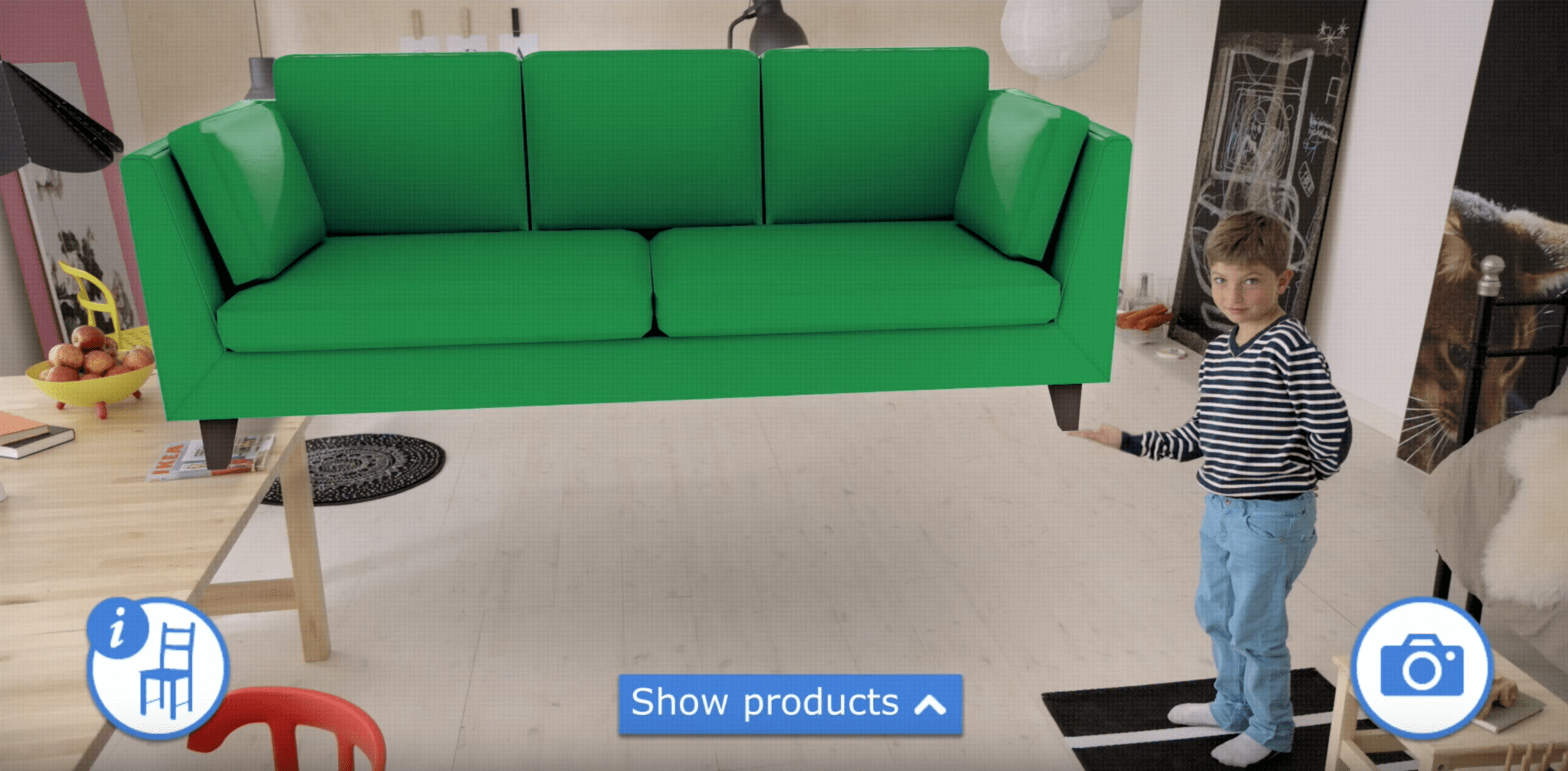
Imagine stepping into your dream interior that does not physically exist. You spot that this green couch is not working perfectly well with that grey rug, and it takes you a couple of gestures to replace it. It saves you so much time and money.
This might sound unrealistic, but the future is already here. Virtual reality (VR) and augmented reality (AR) are being used both by startups and giants like Ikea. While virtual reality simulates total immersion into a world created entirely by software, augmented reality puts the virtual world and the real world, often by overlaying virtual features on top of existing ones.
This app allows you to try a white chair or a black carpet in your particular room. It pairs with the printed 2017 or later IKEA catalog. You need to open the catalog to the item of your choice and lay it on the floor. Then you point your smartphone or another device at the catalog, and the item will spring to life. Full-size and 3D. You can move it around, rotate, walk around it as it is physically present.
Planner 5d is an example of virtual reality revolutionizing interior design practices. Just six years ago, Pinterest changed the way people get inspirations and build their dream interiors. Planned 5D is the Pinterest of the next age. It helps get inspirations from a library full of 3D objects. The app has robust capabilities to manipulate furniture, change colors and create a floor plan layout. According to its website, over 4 million amateur interior designers are already using it!
The world will definitely see much more application of those technologies in interior design. Companies like Google, Microsoft, Facebook (Oculus), HTC, Playstation and much more are investing in VR and AR technologies. Nowadays, VR and AR devices would not cost users a fortune. Entry level for VR is the Google Cardboard with prices $10-$30. Moreover, companies like Go4D, Homido developed a better looking similar product for $25 – $50.
We at Well Woven constantly follow the newest trends in technology, and we believe it is only the beginning of a disruptive shift our industry is about to experience.

Share:
Carpet Styles and Colors: Trends from Domotex 2017
Denise Cooper Invites You Into Her Newly Redecorated Guest Bedroom